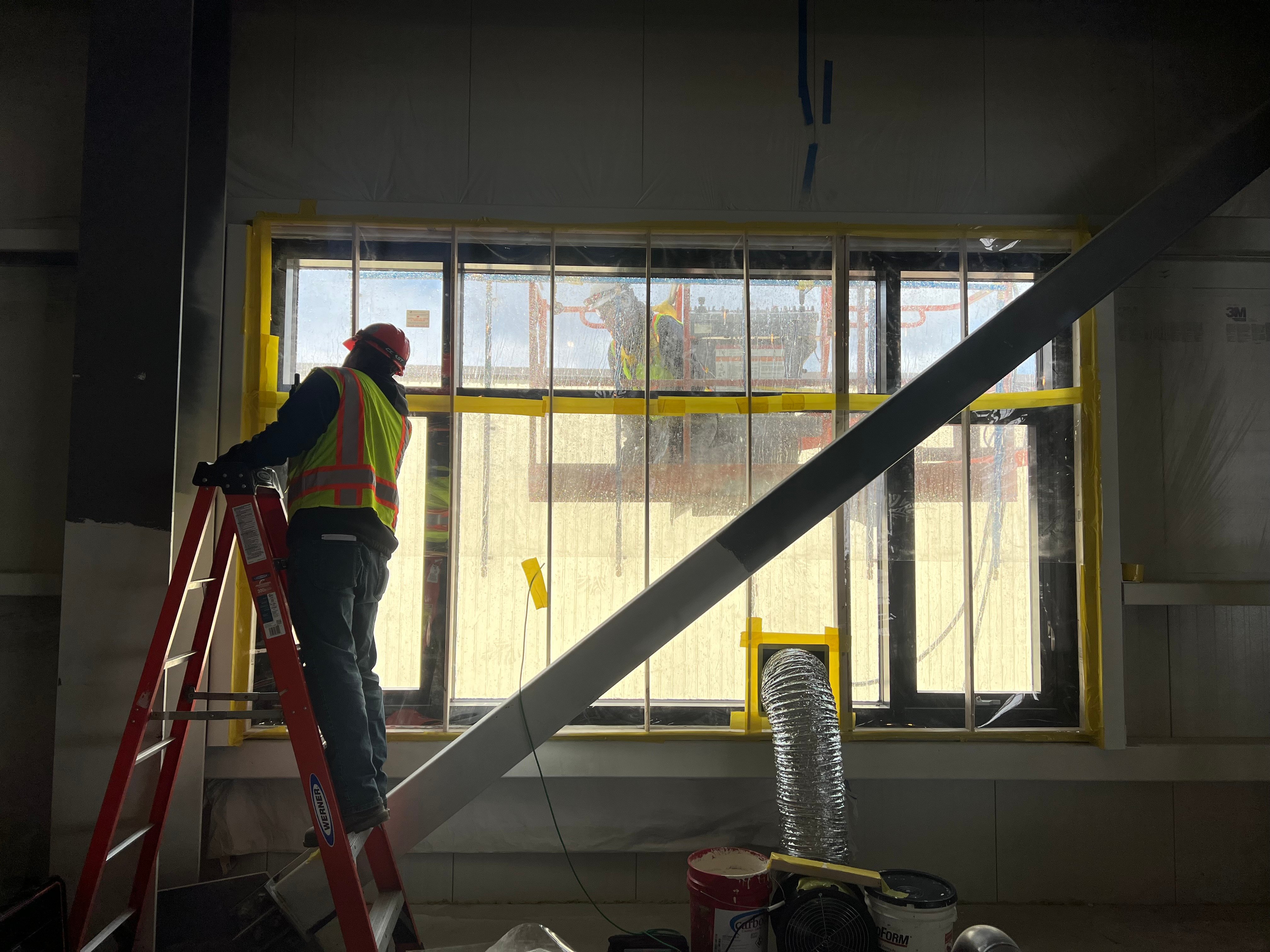
Katie Mason Promoted to Senior Associate
Katie has been an integral part of the Cx Associates team since 2012, growing from Engineering...
Cx Associates performs ASTM C1401 field testing. We've performed building enclosure commissioning and C1401 testing on commercial, industrial, institutional, multifamily, and residential projects across Vermont and the Northeast. Our team includes experts with deep familiarity in building code and enclosure standards.
Adhesion of installed structural sealant to glass and frame substrates in structural glazing applications
Structural silicone glazing systems — curtain walls, storefronts, and point-supported glazing
Primarily new construction quality verification; also applicable to ongoing maintenance programs
Structural glazing specifications, curtain wall commissioning plans, glazing contractor QA programs
Qualitative destructive hand pull — assesses failure mode and bond quality
Ready to schedule building enclosure testing? Contact us to discuss your project timeline and enclosure scope.
ASTM C1401 is a comprehensive guide for structural sealant glazing — the practice of using silicone sealant as the primary structural element bonding glass panels to a metal frame, without mechanical retention at the glass edges. Appendix X2 of that guide describes field test methods for verifying the adhesion of the structural sealant after installation, and Method A is the hand pull tab procedure.
Structural sealant glazing is a life-safety-critical application: if the sealant bond fails, glass panels can detach from the building. This makes adhesion verification during construction and through the building's service life especially important. The hand pull tab test provides a practical, immediate check that the structural sealant has bonded properly to both the glass and the aluminum frame surfaces.
The test procedure is similar in concept to the C1193 Method A hand pull, but the acceptance criteria and the consequences of adhesive failure are significantly more serious. Structural silicone manufacturers specify minimum performance requirements for field adhesion tests, and a pattern of adhesive failures requires immediate investigation and potential re-glazing.

Structural silicone glazing systems where sealant is the primary retention element for glass panels
Two-sided and four-sided structural glazing on curtain wall and storefront systems
Unitized and stick-built curtain wall assemblies with structural silicone infill
New construction quality verification during and after glazing installation
Periodic maintenance inspection on existing structural glazing systems per manufacturer and ASTM C1401 recommendations
Unlike weatherproofing sealants, which must resist air and water but are not structural members, structural silicone carries the dead load and wind load of the glass panel. A glazing system with compromised structural sealant adhesion may appear visually intact while being in a condition where glass panels could detach under wind or seismic loading — a potentially life-threatening condition.
ASTM C1401 recommends an ongoing inspection and testing program for structural glazing systems, not just construction-phase verification. Many structural silicone manufacturers specify that representative field adhesion tests be performed at defined intervals (typically every 10 years) as part of a building facade maintenance program. Cx Associates can assist with both new construction commissioning and ongoing maintenance inspection programs.
These standards are commonly specified alongside or in place of ASTM C1401 depending on project scope. Cx Associates performs all of the following:
Appendix X1, Method A — Quick hand pull tab for routine construction-phase screening
Comprehensive practice for evaluating adhesion of weatherproofing sealant joints
Specification for structural silicone sealants (product specification)
Structural sealant glazing systems design guide (AAMA guidance on structural glazing design and inspection)
Katie has been an integral part of the Cx Associates team since 2012, growing from Engineering...