Katie Mason Promoted to Senior Associate
Katie has been an integral part of the Cx Associates team since 2012, growing from Engineering...
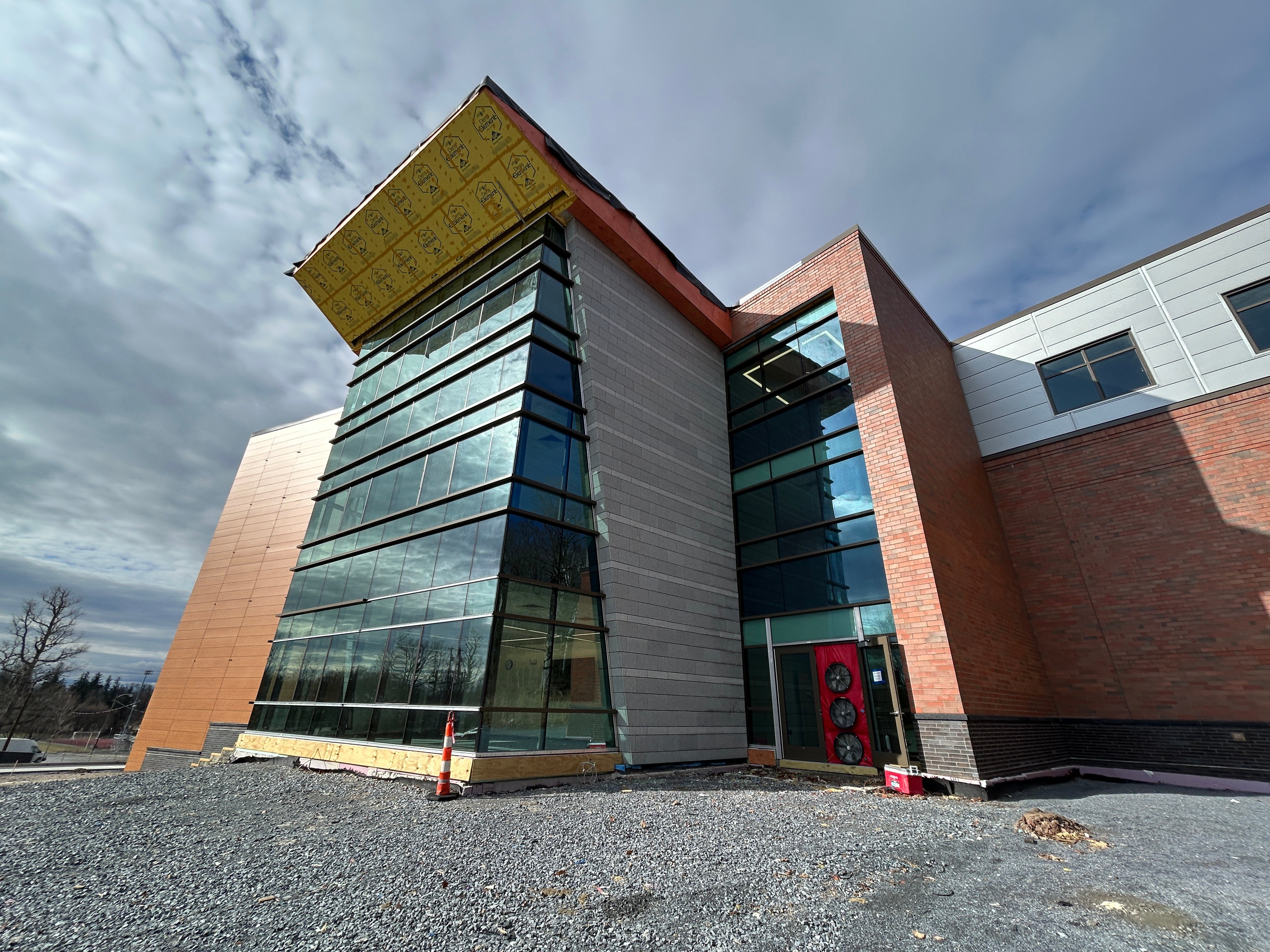
Cx Associates performs ASTM E1186 field testing. We've performed building enclosure commissioning and air barrier field testing on commercial, industrial, institutional, multifamily, and residential projects across Vermont and the Northeast. Our team includes experts with deep familiarity in building code and enclosure standards.
Air leakage at system-to-system air barrier interfaces and stand-alone air barrier systems
Air/vapor barriers, WRBs, curtain walls, windows, doors, etc.
Both new construction and existing buildings
Qualitative site detection (not quantitative leakage rate)
IECC, ASHRAE 90.1, LEED, Passive House programs
Ready to schedule building enclosure testing? Contact us to discuss your project timeline and enclosure scope.
ASTM E1186 is a collection of standardized practices published by ASTM International for locating the specific sites where air leaks through a building's envelope or air barrier system. The current version is E1186-22, issued in 2022 and overseen by Committee E06 on Performance of Buildings.
Unlike ASTM E779 or ASTM E3158, which measure how much air leaks through a building as a whole, E1186 is a diagnostic standard: it tells you where the leaks are, not just how much air is moving. This makes it especially valuable during construction, when targeted corrections can still be made before finishes are installed — and after occupancy, when tracking down persistent energy, comfort, or moisture problems.
The standard offers multiple detection methods — from infrared cameras to pressurized test chambers to smoke tracers — giving practitioners flexibility to choose the approach best suited to the assembly type, construction phase, and site conditions. All methods are qualitative in nature; they identify leakage locations but do not produce a measured leakage rate.
Air barrier systems and their interface with other air barriers for continuity
Curtain wall systems, window and door assemblies, and their rough openings
Roof-to-wall and floor-to-wall transitions and other envelope interfaces
Commercial, institutional, multifamily, and residential construction
New construction during the building enclosure phase (before finishes)
Existing buildings experiencing energy loss, moisture issues, or comfort complaints
LEED, PHIUS, Government or other similar projects where high enclosure performance is required
Note: E1186 identifies leakage locations. To quantify overall building airtightness (cfm/sq ft or ACH50), pair E1186 with ASTM E779 or ASTM E3158.
Air leakage is one of the leading causes of energy loss, occupant discomfort, and moisture damage in buildings. Approximately 30% of a building's energy consumption compensates for uncontrolled air movement — and in cold climates like Vermont and the broader Northeast, that number can be even higher during heating season.
Beyond energy, air exfiltration in cold climates carries warm, moisture-laden interior air into wall cavities, where it condenses and degrades insulation, framing, and cladding. ASTM E1186 testing — especially when performed during construction — allows enclosure deficiencies to be corrected before they become expensive post-occupancy problems.
From a compliance and certification standpoint, E1186 is referenced by or consistent with IECC air barrier requirements, ASHRAE 90.1 commissioning provisions, LEED v4 Enhanced Commissioning credits, and Passive House enclosure verification protocols. For federal and DOD projects, it aligns with the USACE Air Leakage Test Protocol.

These standards are commonly specified alongside or in place of ASTM E1186 depending on project scope. Cx Associates performs all of the following:
Standard Test Method for Determining Air Leakage Rate by Fan Pressurization (Blower Door Testing)
Standard Test Method for Field Determination of Water Penetration of Installed Exterior Windows, Skylights, Doors, and Curtain Walls, by Uniform or Cyclic Static Air Pressure Difference (Fenestration Water Penetration Testing, often coupled with AAMA 501.1, 502, or 503 test standards)
Standard Test Method for Measuring the Air Leakage Rate of a Large or Multizone Building (Blower Door Testing)
Standard Test Method for Field Measurement of Air Leakage Through Installed Exterior Windows and Doors (Fenestration Air Tightness Testing)
Standard Practice for Thermographic Inspection of Insulation Installations in Envelope Cavities of Frame Buildings (Infrared Imaging)
Katie has been an integral part of the Cx Associates team since 2012, growing from Engineering...