Katie Mason Promoted to Senior Associate
Katie has been an integral part of the Cx Associates team since 2012, growing from Engineering...
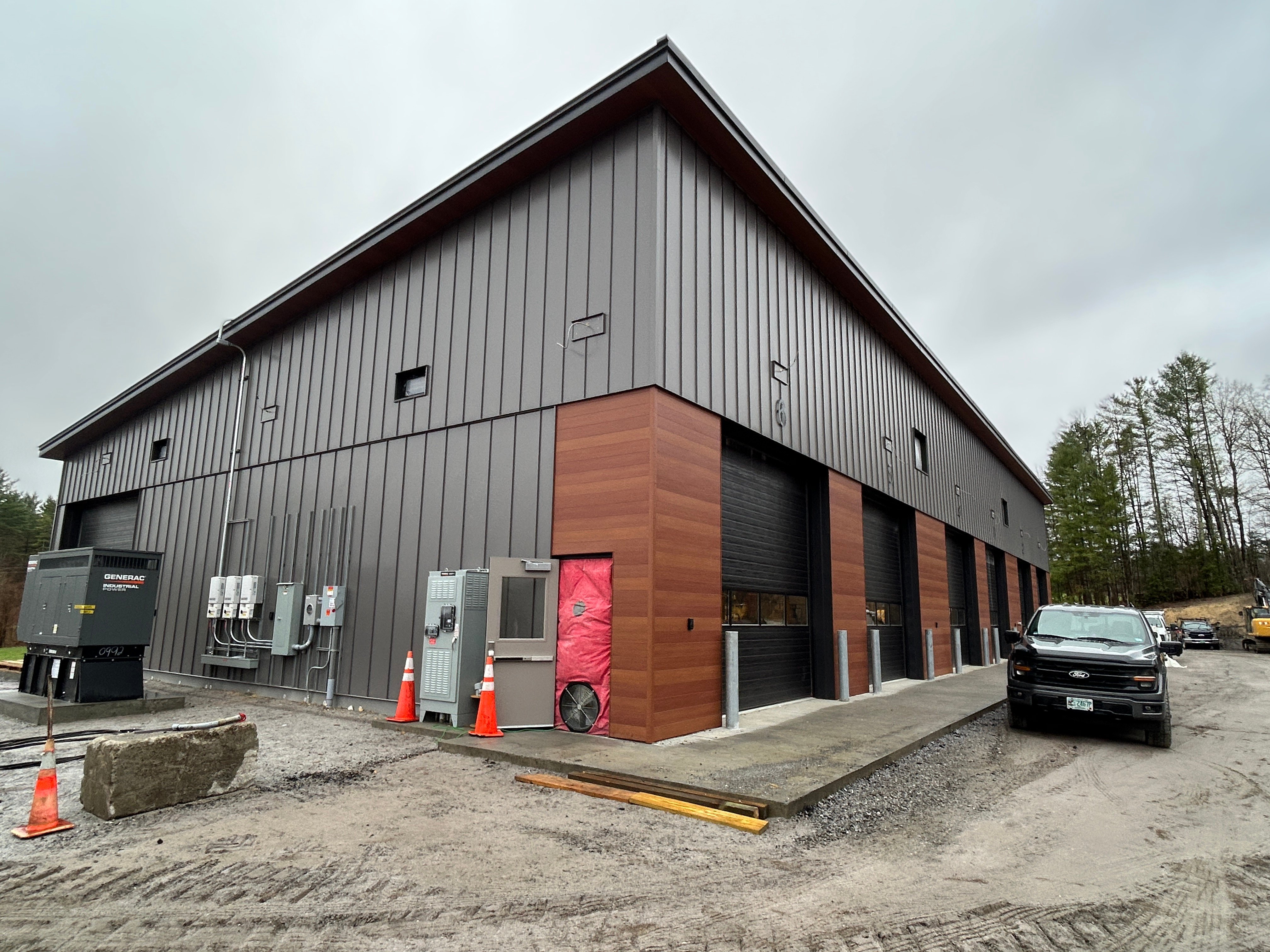
Cx Associates performs USACE Air Leakage Test Protocol testing on military, federal, and government building projects throughout Vermont and the Northeast.
Air leakage rate of building envelopes on military and federal facilities using fan pressurization
Military facilities, DoD construction, federal government buildings where USACE protocols are specified
Primarily new construction compliance verification; also applicable to existing facility assessments
USACE construction specifications, UFC (Unified Facilities Criteria), DoD sustainability requirements
Quantitative — produces a measured air leakage rate expressed as cfm75/ft² of above-grade envelope area
Ready to schedule building enclosure testing? Contact us to discuss your project timeline and enclosure scope.
The U.S. Army Corps of Engineers Air Leakage Test Protocol for Building Envelopes is a specialized blower door testing protocol developed by USACE's Engineer Research and Development Center (ERDC) for use on military installations and federal government facilities. It establishes specific test procedures, performance metrics, reporting requirements, and qualification standards for personnel performing air leakage testing on DoD construction projects.
The protocol draws on ASTM E779 and ASTM E3158 as its technical foundation but adds requirements specific to military construction: qualification requirements for testing personnel and equipment, specific reporting formats, and performance targets that reflect DoD energy performance goals. The current version is Version 3, published in 2012, which incorporated lessons learned from large-scale implementation of air leakage testing on Army construction projects.
The USACE protocol expresses air leakage in units of cfm75 per square foot of above-grade building envelope area — a metric that normalizes results to building surface area rather than volume (as ACH50 does), making it more meaningful for comparing buildings of different sizes and shapes. The benchmark target for DoD construction is 0.25 cfm75/ft² of above-grade envelope, which is substantially more stringent than typical commercial building requirements.

New construction on Army, Navy, Air Force, and other DoD installations
Military facilities where UFC (Unified Facilities Criteria) energy requirements are applicable
Federal government buildings where USACE is the construction agent
Projects where construction specifications reference the USACE Air Leakage Test Protocol specifically
Facilities seeking compliance with Executive Order energy performance requirements for federal buildings
DoD facilities are subject to executive order and Congressional mandates requiring significant reductions in building energy use. Air infiltration has been identified as one of the primary contributors to energy loss in existing military building stock, and controlling air leakage in new construction is a key strategy in meeting DoD energy performance goals. The USACE protocol's more stringent performance target (0.25 cfm75/ft² versus the typical commercial building target of 0.40 cfm/ft²) reflects this priority.
Beyond energy, air leakage control on military facilities contributes to CBRN (chemical, biological, radiological, nuclear) protection for occupied facilities — a requirement that does not apply to commercial construction but is a design consideration on certain DoD projects.
These standards are commonly specified alongside or in place of USACE Air Leakage Test Protocol v3 depending on project scope. Cx Associates performs all of the following:
Multi-point blower door test (more rigorous; used for commercial buildings and high-performance residential applications)
Large building blower door testing
Air leakage site detection (used to locate and correct leakage paths identified during protocol testing)
Unified Facilities Criteria for Architecture (references air leakage requirements for DoD facilities)
Energy standard for buildings (baseline commercial standard that the USACE protocol exceeds
Katie has been an integral part of the Cx Associates team since 2012, growing from Engineering...