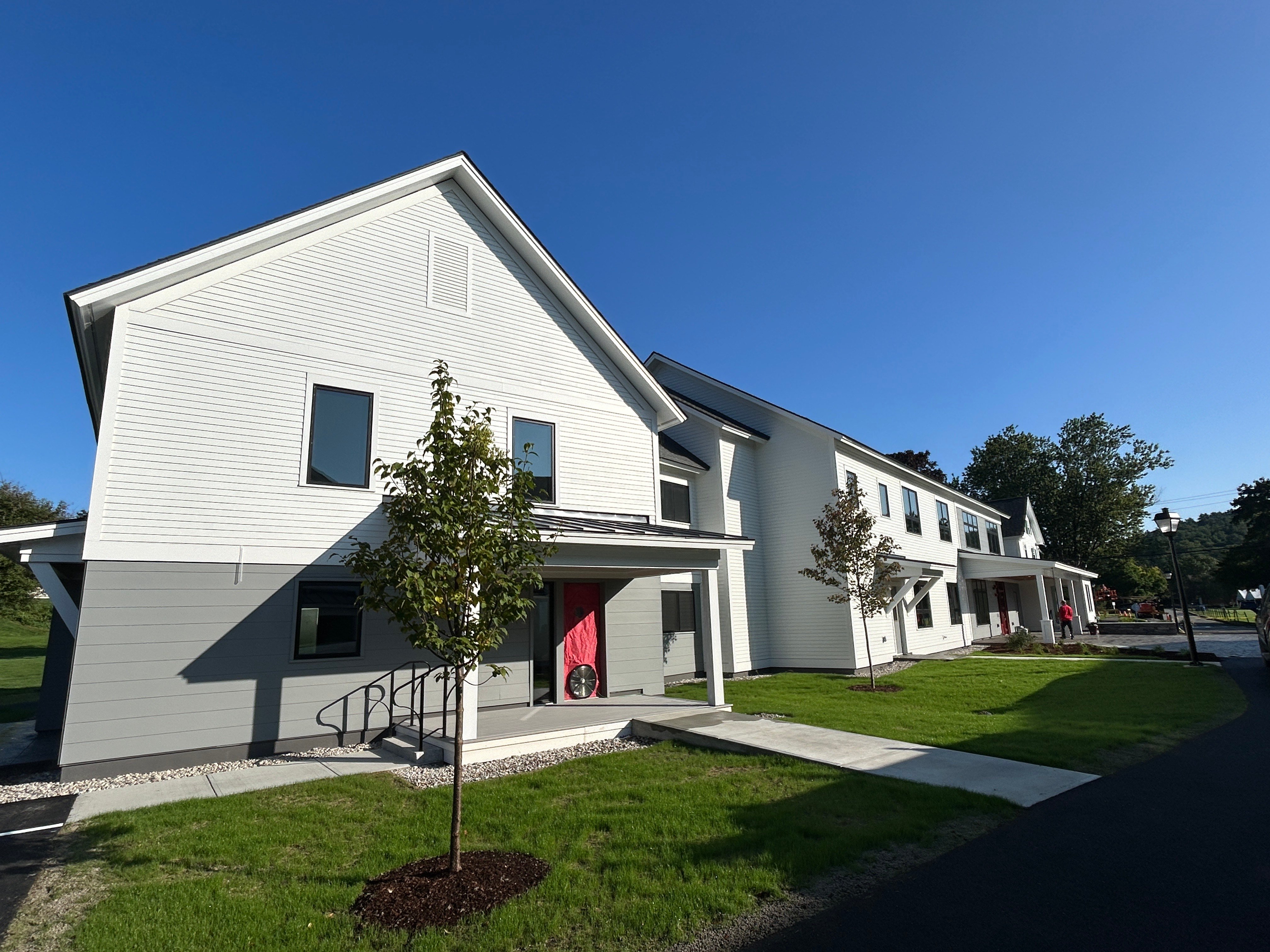
Image_20240823_082617_443

ASTM E1827: Determining Air Tightness of Buildings Using an Orifice Blower Door

Cx Associates performs ASTM E1827 field testing. We've performed building enclosure commissioning and air barrier field testing on commercial, industrial, institutional, multifamily, and residential projects across Vermont and the Northeast. Our team includes experts with deep familiarity in building code and enclosure standards.

ASTM E1827 At a Glance


What it tests

Air tightness of buildings using a single-point pressurization test with an orifice-style blower door

Applicable to

Residential buildings and small commercial buildings; buildings where a multi-point E779 test is not required 

New vs Existing

Both new construction code compliance and existing building energy audits

Referenced by

IECC residential provisions, ENERGY STAR, DOE Zero Energy Ready, Home Energy Rating System (HERS)

Test Type

Quantitative — single-point measurement at 50 Pa; produces cfm50 or ACH50


We can help!

Ready to schedule building enclosure testing? Contact us to discuss your project timeline and enclosure scope.

etienne-beauregard-riverin-B0aCvAVSX8E-unsplash-1
What is ASTM E3158?

ASTM E1827 is a simplified blower door test method for measuring the airtightness of buildings. Unlike ASTM E779, which uses a multi-point pressurization and depressurization procedure to characterize the building's leakage curve, E1827 uses a single-point measurement at 50 Pascals — typically using an orifice-style fan that measures flow directly through calibrated orifice plates. This makes the test faster and simpler to perform, which is appropriate for residential applications where the test is conducted routinely by energy raters, contractors, and building inspectors.

The result is expressed as cfm50 (cubic feet per minute at 50 Pa) or ACH50 (air changes per hour at 50 Pa). These values are compared directly to the applicable code limit or certification target. The IECC residential provisions require blower door testing on all new residential construction, with maximum allowable leakage rates that vary by climate zone.

Scope and Application


Single-family residential new construction — IECC code compliance testing


Multifamily residential buildings — individual unit testing or whole-building testing


Small commercial buildings where a simplified test is specified or accepted

Existing residential buildings — energy audit baselines, pre- and post-retrofit measurement


Multi-family unit compartmentalization testing


Certification programs — ENERGY STAR, DOE Zero Energy Ready, LEED for Homes, Passive House, HERS ratings


Why should I consider this test?

Blower door testing became mandatory for new residential construction in U.S. energy codes because visual inspection and material specification alone cannot verify that a house is actually airtight. A home can have continuous air barrier materials, inspected insulation, and code-compliant windows and still fail its blower door test — because air infiltration is the product of small gaps at framing transitions, penetrations, and rough openings that are easy to miss and impossible to assess without pressurization. ASTM E1827 provides the objective, measured result that confirms the building performs as intended, not just as specified.

In Vermont's Climate Zone 6, where buildings are heated for six or more months of the year, airtightness has an outsized effect on energy use, comfort, and moisture management. The difference between a house at 4.0 ACH50 and one at 1.5 ACH50 is meaningful in every heating bill for the life of the building — and in cold climates, uncontrolled air exfiltration carries moisture into wall cavities where it can cause long-term damage that far exceeds any energy cost. For builders pursuing ENERGY STAR, DOE Zero Energy Ready, or Passive House certification, E1827 testing is not just a compliance requirement — it is the performance verification that gives those certifications their meaning.


 

Related Testing Standards

These standards are commonly specified alongside or in place of ASTM E1827 depending on project scope. Cx Associates performs all of the following:

  • ASTM E1186

    Air leakage site detection (used to locate leaks identified by E1827)

    Learn more...

  • ISO 9972

    International standard for airtightness testing (used for Passive House and international projects)